
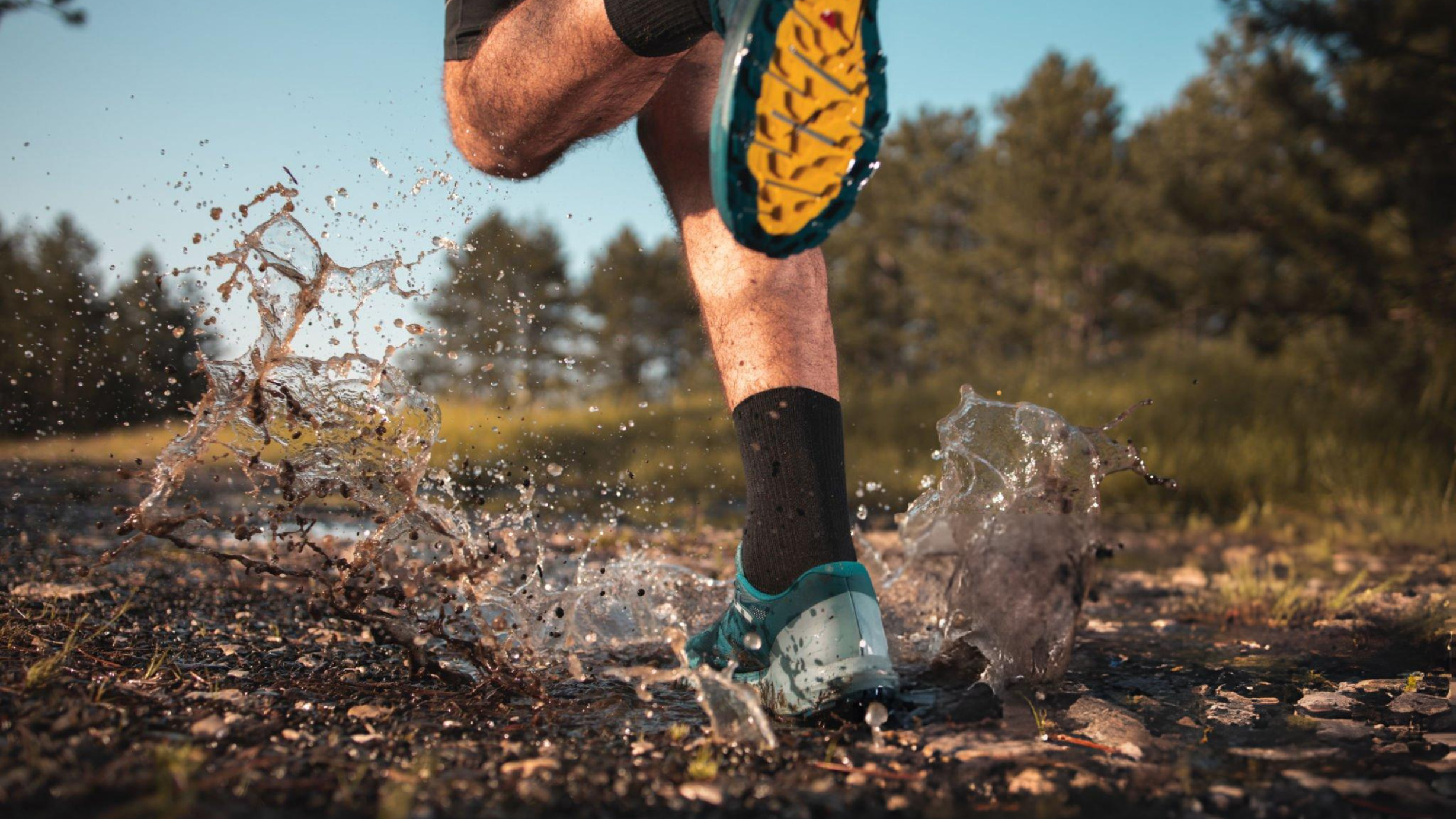
If you’ve ever stepped into a puddle, crossed a stream, or run through soaked grass and felt your shoes instantly become heavy sponges, you know how frustrating wet uppers can be. Once water seeps in, it lingers, adding weight, softening your socks, and increasing the risk of blisters. That’s where hydrophobic mesh uppers come into play.
Hydrophobic mesh isn’t fully waterproof. It’s designed to repel water, not seal it out. The goal isn’t to keep every drop away; it’s to prevent quick saturation and allow your shoes to shed moisture faster than traditional fabrics. For trail runners who deal with wet conditions, morning dew, shallow crossings, or unpredictable weather, this feature can make a noticeable difference in comfort and performance.
Let’s explore what hydrophobic mesh uppers are, how they work, and why trail runners benefit from them.
What Is a Hydrophobic Mesh Upper?
Hydrophobic mesh is a breathable, lightweight upper material that’s treated or engineered to repel water on contact. Unlike waterproof membranes, which create a full barrier, hydrophobic mesh simply keeps water from soaking in quickly.
A shoe with a hydrophobic mesh upper will:
- Resist water absorption
- Keep the upper feeling lighter in wet conditions
- Dry significantly faster
- Prevent long-lasting sogginess
This creates a balanced system: water resistance without sacrificing airflow.
Why Hydrophobic Mesh Matters for Trail Running
Trails introduce runners to every kind of moisture imaginable:
- Rain-soaked switchbacks
- Dew-covered grass on early mornings
- Small creek crossings
- Wet roots and mud splashes
- Snowmelt and slushy paths
Traditional mesh absorbs water immediately, weighing down the shoe. Hydrophobic mesh helps reduce that initial soak, which means:
Less Weight on Your Feet
Wet fabric adds surprising weight. Hydrophobic mesh prevents shoes from becoming waterlogged.
Faster Drying
Even after a full soaking, hydrophobic uppers dry faster, keeping your socks and skin healthier.
Reduced Blister Risk
Dryer shoes mean less friction, fewer hot spots, and more comfort on long runs.
Better Performance in Variable Conditions
You stay lighter, quicker, and more confident when your upper doesn’t cling to moisture.
Hydrophobic vs Waterproof: Understanding the Difference
Many runners confuse hydrophobic uppers with waterproof shoes. The two are very different.
Hydrophobic Mesh:
- Repels moisture
- Breathable
- Not fully waterproof
- Ideal for warm, wet, or humid conditions
- Dries quickly when soaked
Waterproof Membranes (like Gore-Tex):
- Block water entirely
- Less breathable
- Can trap heat
- Great for cold, wet environments
- Slower to dry if water gets in from the top
Hydrophobic mesh strikes a sweet spot for runners who want water resistance without overheating or losing flexibility.
How Hydrophobic Mesh Improves Long-Distance Comfort
Long trail runs often involve hours of exposure to moisture. Once your shoes stay wet, problems follow:
- Pruned skin
- Softened footpads
- Increased friction
- Higher blister risk
- Heavier stride
Hydrophobic mesh won’t keep your feet bone dry, but it significantly reduces the time your shoes stay wet. During ultras or all-day adventures, this can protect your skin and maintain comfort when it matters most.
Durability and Breathability
Hydrophobic mesh uppers are designed to balance strength and ventilation. Most models use:
- Reinforced overlays
- Tight but breathable weave
- Coatings that repel water without blocking airflow
You get air circulation while keeping moisture from soaking in too quickly, ideal for warm climates and fast-paced trail running.
When Hydrophobic Mesh Uppers Are Most Useful
These uppers shine in several trail-running scenarios:
- Spring and fall wet seasons
- Races with water crossings
- Humid climates where shoes stay damp
- Early morning training runs in the dew
- Runs that mix sun, shade, and moisture
If you run in hot, rainy environments, hydrophobic mesh is especially valuable.
How to Care for Hydrophobic Mesh
To maintain water-repellent performance:
- Rinse mud and dirt after runs
- Avoid harsh detergents
- Let the shoes air dry fully
- Reapply hydrophobic spray if the coating fades over time
Good maintenance keeps the fabric working effectively.
Final Thoughts
Hydrophobic mesh uppers give trail runners a practical advantage in wet, mixed, or unpredictable conditions. They won’t replace waterproof membranes, and they’re not meant to. Instead, they deliver a balanced solution: water resistance with breathability, quick drying with flexibility, and comfort without excess weight.
For runners who crave lightweight performance but still want protection from splashes and moisture, hydrophobic mesh uppers are one of the most reliable choices. They keep your shoes feeling lighter, your skin healthier, and your stride more efficient, no matter what the trail throws at you.